
 Syspirit
ChatGPT, Claude, Perplexity, Gemini… There’s never been so many choices and so much evolution in AI, it’s hard to keep up. Here, I’m going to focus only on ChatGPT and Claude, two of the major players in the AI race, to share my personal experience. I’m not covering Gemini because I haven’t used it enough for my needs.
AI and LLMs: What Are We Talking About?
Before comparing anything, let’s go back to the basics. Because “AI” and “LLM” are not the same thing.
Artificial Intelligence (AI)
AI (Artificial Intelligence) is the overarching concept. It’s the ability for a machine to simulate a form of intelligence: understanding, reasoning, learning, making decisions. AI encompasses a wide range of technologies: computer vision, robotics, speech recognition, autonomous vehicles…
LLMs (Large Language Models)
An LLM (Large Language Model) is a specific type of AI specialized in language processing. In practice, it’s an artificial neural network trained on massive amounts of text to understand and generate human language.
ChatGPT and Claude are interfaces built on top of LLMs. Behind ChatGPT, there are OpenAI’s GPT and o-series models. Behind Claude, there are Anthropic’s Claude models.
When people say “I’m using AI”, what they’re actually using is an LLM through a conversational interface. The LLM is the engine. The interface (ChatGPT, Claude…) is the car.
Agents, Skills and Agentic AI
When you chat with ChatGPT or Claude in a conversation, you’re in a classic question/answer mode. You ask a question, the AI responds, and that’s it. It’s useful, but limited.
Agentic AI is the next step. Instead of just responding, the AI can act: read files, execute commands, call APIs, modify code, run tests, and chain these actions autonomously to reach a goal. You no longer tell it “how to do” things step by step, you tell it what to do, and it figures out the rest.
An agent is therefore an LLM that has been given tools (access to the terminal, file system, Git, APIs…) and the ability to decide when and how to use them. In practice, here’s what happens when you give a task to a code agent:
- It analyzes the request and the context (the codebase, existing files…)
- It plans the necessary steps
- It executes: edits files, runs commands, creates tests
- It verifies the result (compilation errors, passing tests…)
- It iterates if something doesn’t work, and tries again until it does
This is exactly what Codex and Claude Code do: they are agents. An agent can also launch sub-agents, specialized agents that work in parallel on sub-tasks (one for the backend, one for tests, one for documentation…).
Skills (or capabilities) are a more recent concept. They are extensions you add to an agent to give it new capabilities or preconfigured behaviors.
For example, a “frontend-design” skill that enables the agent to generate polished web interfaces, or a “project-planner” skill to automatically structure and plan a project.
Skills are like plugins: they enrich the agent with specialized workflows without having to explain everything from scratch each time.
ChatGPT
OpenAI in Brief
OpenAI is the company behind ChatGPT. Founded in 2015 as a non-profit organization, it became a full-fledged commercial company, restructured as a PBC (Public Benefit Corporation) in October 2025 with Microsoft holding 27% of the shares.
In numbers: 800 million weekly active users, approximately $20 billion in annual revenue by late 2025, and massive investments with the Stargate project ($500 billion over 4 years to build AI data centers in the United States). Despite these numbers, OpenAI was still reporting $5 billion in losses in 2024.
The Models
OpenAI historically offered two model families: the GPT series (general-purpose) and the o series (reasoning). With GPT-5, the two merged into a single model.
| Model | Status | Strength |
|---|---|---|
| GPT-5.2 | Default model | Thinking and Instant modes |
| GPT-5.3-Codex | New (Feb 5, 2026) | Unified code + reasoning, 25% faster |
| GPT-5-Codex-Mini | Lightweight version | ~4x more usage per subscription |
GPT-5.2 has been the default model in ChatGPT since December 2025. It combines the capabilities of the former GPT and o series into a single model, with a “Thinking” mode (extended reasoning) and an “Instant” mode (quick response).
GPT-5.3-Codex, released on February 5, 2026, the same day as Anthropic’s Opus 4.6 (TechCrunch), is the new flagship model for code. It unifies code and reasoning in a single model that’s 25% faster, with a context window of 400K tokens. Notably, it’s the first OpenAI model that contributed to its own development (OpenAI).
Pricing: the free version gives access to GPT-5.2 with usage limits. The Plus subscription ($20/month) unlocks Thinking mode, GPT-5.3-Codex, and raises the limits. The Pro plan ($200/month) offers unlimited usage with priority access.
Codex: The Code Agent
Codex is OpenAI’s dedicated code tool, launched in May 2025. It comes in three forms:
Codex Cloud: an agent that runs in an online sandbox environment. You give it a task, it works in parallel in its sandbox with repo access, and proposes pull requests. It’s available directly in ChatGPT for Plus users.
Codex CLI: a command-line agent, open source and written in Rust. It runs in the terminal, reads the project code, makes modifications and executes commands with three autonomy levels (read-only, auto, full access). It also supports MCP, a protocol created by Anthropic that we’ll discuss below.
Codex App (macOS): launched on February 2, 2026, it’s a native app for managing multiple agents in parallel, organized by project. It includes support for Git worktrees and a built-in code review tool. Over 1 million developers used Codex last month.
Also worth noting: Apple Xcode 26.3 (in beta) now natively integrates both Codex and Claude Agent, a sign that both tools have become essential.
Claude
Anthropic in Brief
Anthropic is the company behind Claude. Founded in 2021 by former OpenAI members (including Dario and Daniela Amodei), it positions AI safety as its top priority.
In numbers: a valuation that went from $61.5 billion to potentially $350 billion by early 2026, approximately $27 billion raised in total, and heavyweight investors like Amazon ($8 billion) and Google (~$3 billion). An IPO is being prepared for 2026.
The Models
Anthropic offers three model tiers, with the latest Opus 4.6:
| Model | Status | Strength |
|---|---|---|
| Haiku 4.5 | Lightweight model | Fast, economical |
| Sonnet 4.5 | Mid-range model | Good speed/intelligence balance |
| Opus 4.6 | New flagship (Feb 5, 2026) | Adaptive Thinking, Agent Teams, 128K output |
Opus 4.6 is the latest model. It offers a context window of 200K tokens (with 1 million in beta, reserved for the API for now) and up to 128K tokens in output. It introduces two major features: Adaptive Thinking, where the model automatically decides when to activate extended reasoning based on task complexity, and Agent Teams, which allow launching teams of agents that work in parallel and coordinate autonomously.
Performance-wise, Opus 4.6 and GPT-5.3-Codex are neck and neck on code, while Opus significantly outperforms on reasoning and complex tasks (OfficeChai, DigitalApplied).
Pricing: the free version gives limited access to Sonnet. The Pro subscription ($20/month) unlocks all models including Opus. The Max 5 plan ($100/month) offers 5x more tokens, and Max 20 ($200/month) goes up to 20x for intensive use.
MCP: A Game-Changing Standard
MCP (Model Context Protocol) is an open protocol created by Anthropic in November 2024 to standardize how AI connects to external tools and data sources.
Before MCP, each integration (reading a file, calling an API, accessing a database…) required a custom connector. MCP solved this problem by providing a universal interface.
Adoption has been rapid: OpenAI adopted it in March 2025, Google DeepMind in April, then Microsoft and GitHub joined the steering committee. By late 2025, it had over 97 million downloads per month and 10,000+ active servers. In December 2025, MCP was entrusted to the Agentic AI Foundation under the Linux Foundation, co-founded by Anthropic, Block and OpenAI.
MCP servers now exist for GitHub, Notion, Figma, Stripe… It has become the standard for connecting AI to any tool.
Claude Code: The Heavy Hitter
If Claude has one major advantage, it’s Claude Code. Launched in February 2025 and made GA in May 2025 with Claude 4, it’s a code agent that works in natural language. What makes it powerful is that it doesn’t just generate code: it executes it, tests it, iterates and fixes it until it works. It analyzes the entire project before acting, not just the open file. You can configure its conventions through a CLAUDE.md markdown file, and it follows them automatically.
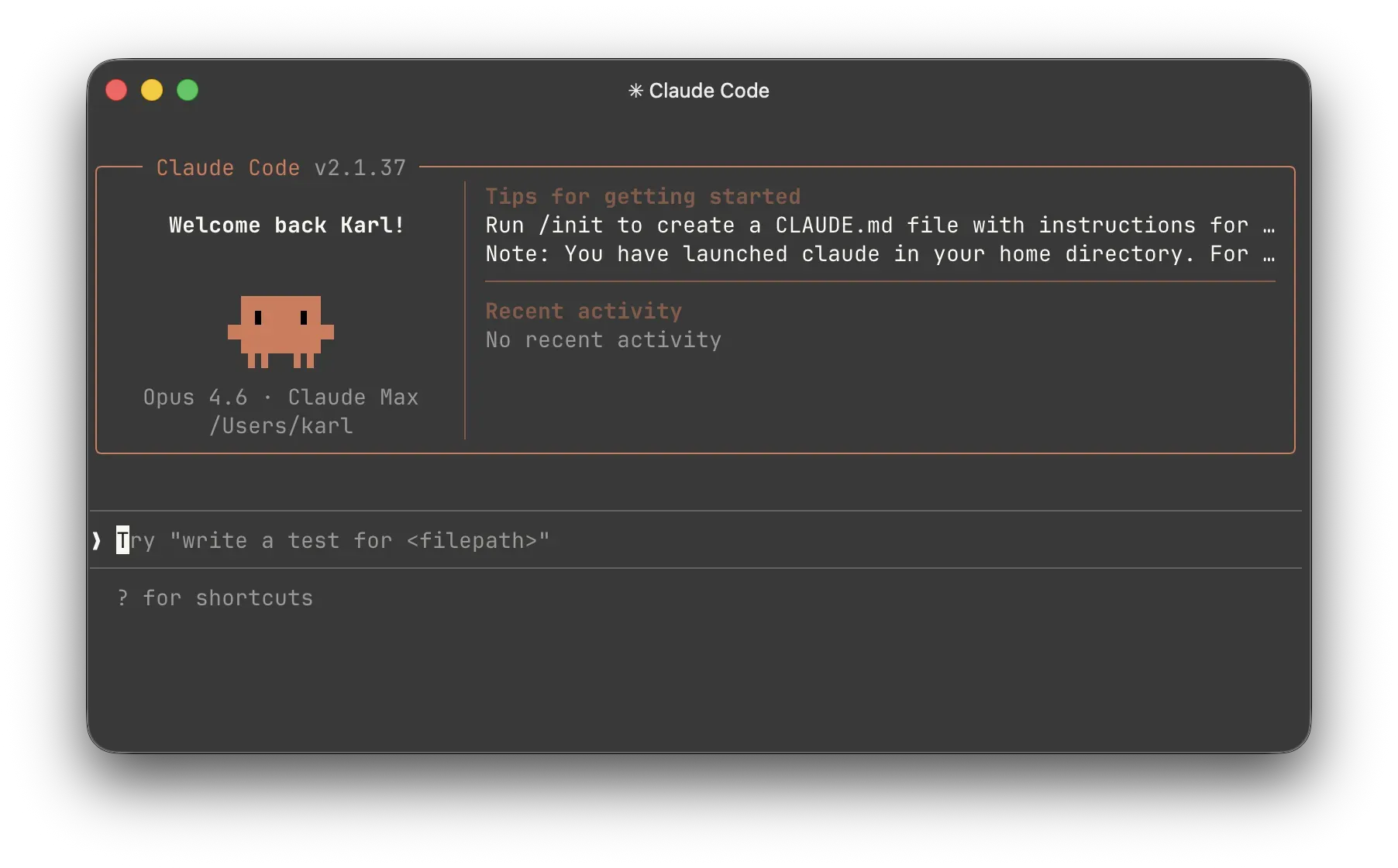
It also comes in several forms:
Claude Code CLI: the command-line agent, the core product. It lives in the terminal, understands the codebase, edits files, executes commands and manages Git.
Claude Code IDE: natively integrated into VS Code and JetBrains, it works directly in the editor with the same engine as the CLI.
Claude Desktop (macOS): the native app that brings together Chat, Code and Cowork, a tab released in January 2026 designed for non-developers. You give it access to a folder, describe what you want in natural language, and it plans and executes autonomously.
Claude Code Web and Mobile: accessible from the browser on claude.ai and via the iOS app, for those who prefer a graphical interface.
With Opus 4.6, Claude Code gains Agent Teams: teams of agents that split work in parallel (backend, tests, docs…) and coordinate autonomously. It also includes a skills and hooks system to customize its behavior, MCP to connect to any external tool, and Context Compaction (beta) that automatically summarizes old context to maintain long sessions without losing track.
To use Agent Teams and the maximum output tokens (up to 128K with Opus 4.6), you just need to configure the ~/.claude/settings.json file:
{
  "env": {
    "CLAUDE_CODE_EXPERIMENTAL_AGENT_TEAMS": "1",
    "CLAUDE_CODE_MAX_OUTPUT_TOKENS": "128000"
  }
}
ChatGPT or Claude: Which to Choose?
The honest answer: it depends on your use case. Both are excellent tools, but they don’t shine in the same areas.
The Comparison
| Criteria | ChatGPT | Claude |
|---|---|---|
| Daily use | Excellent, very versatile | Very good, slightly fewer built-in features |
| Web search | Native and performant | Native and performant |
| Image generation | DALL-E natively integrated | No image generation… |
| Writing | Good, sometimes a bit generic | Natural, more nuanced, can adapt to the user’s style |
| Ecosystem | GPT Store, Codex App | MCP, Skills, Hooks, Agent Teams |
| Pricing | Free / $20 / $200 | Free / $20 / $100 / $200 |
Codex vs Claude Code
For code specifically, this is the matchup I care about most:
| Criteria | Codex (GPT-5.3-Codex) | Claude Code (Opus 4.6) |
|---|---|---|
| Open source | Yes (CLI in Rust) | No |
| Context | 400K tokens | 200K tokens (1M in beta API) |
| Max output | Not disclosed | 128K tokens |
| Multi-agent | Yes (Codex App, worktrees) | Yes (Agent Teams, sub-agents) |
| Adaptive Thinking | No | Yes (automatically adjusts its effort) |
| Context Compaction | No | Yes (long sessions without loss) |
| Project config | codex.md | CLAUDE.md, hooks, skills |
Both models were released on the same day and each excels in its domain. Context-wise, Codex takes the lead with 400K tokens versus 200K for Claude Code on a subscription (the 1M is reserved for the API for now). What makes the difference for me on Claude’s side: Adaptive Thinking that automatically adjusts its reasoning effort, Context Compaction that enables longer sessions without losing track, and the ability to add skills.
My Personal Experience
I use ChatGPT in its free version from time to time for quick questions, some web searching and image generation. But most of my time is spent with Claude, particularly Claude Code for development, writing, scripts, debugging, brainstorming… It even helps me write my articles while keeping my tone and style. And on complex tasks, the larger context window and ability to stay focused over time make a real difference.
For code, it has clearly taken over my workflow. It’s fast, reliable, precise, and above all easy to steer with the CLAUDE.md file. You define the project’s conventions once, and it follows them.
Another strong point: custom commands. You can create your own commands to avoid repeating yourself, and it genuinely changes the workflow. For example, I have a /go to resume a session (it re-reads the todolist, the current sprint, the relevant files and knows exactly where to pick up), a /done to update the todolist, and a /status to check where we are in development.
Conclusion
Each AI has its strengths. ChatGPT remains a versatile Swiss army knife, perfect for diverse daily use. Claude, with its ecosystem of tools designed for developers, has found its niche and fills it very well.
My choice: I cancelled ChatGPT Plus to keep only Claude Max. When I made that choice, Codex wasn’t there yet. Today, on paper, it has clearly caught up. But after more than six months of intensive use, Claude Code has transformed the way I work so much that I have no reason to switch. For everything else (quick questions, web search, image generation), ChatGPT’s free version is more than enough.
My complaints: no image generation (forced to switch to ChatGPT or Midjourney when I need it) and the usage limits that are noticeable, even on the Max plan. During intensive sessions with Claude Code, I sometimes hit the ceiling. It’s not an all-in-one, but for my main use case, it’s the best investment.
The race between OpenAI and Anthropic is far from over. Models evolve regularly and rapidly. What’s true today might not be in six months. But for now, my choice is made.
Useful links: